


7 Smart Tips for an Abu Dhabi City Tour From Sharjah
7 Smart Tips for an Abu Dhabi City Tour From Sharjah
At 7 a.m., a family settles into a quiet car in Sharjah with coffee in hand. The children are still sleepy. One parent checks a printed itinerary, because the road to Abu Dhabi is long enough to make timing the whole day.
That small head start changes everything on an abu dhabi city tour from sharjah. Leave too late and every stop starts to feel negotiated. Leave early and you give yourself something much more valuable than speed — room to breathe.
The search results around this route point in a clear direction: people usually plan it as a full-day outing, and they split between pre-arranged plans and private chauffeur travel. That means the day works best when you focus on timing, route logic, and comfort rather than trying to cram in every landmark on the map.
#1 Leave Sharjah early so the day stays flexible
What it is
This means setting a real departure time the night before and treating it as fixed. Search results for this trip often frame it as a full-day route from Sharjah, which tells you something practical right away: if the day is long, the morning matters more than you think.
Why it matters
An early start gives you a buffer against traffic, slow boarding, last-minute coffee stops, and the very normal delays that happen when you are traveling with children, parents, or colleagues. You do not need perfect roads to have a smooth day. You need a schedule that can survive imperfect roads.
Practical rule: the earlier the departure, the less your sightseeing schedule depends on perfect traffic.
Quick example
If you leave Sharjah before the morning rush instead of trying to fit the drive in later, you are far more likely to reach Abu Dhabi with time for an unhurried first stop, a proper lunch, and a few spontaneous photo breaks. A 7 a.m. departure feels early in the driveway. By noon, it usually feels wise.
#2 Choose a private chauffeur if comfort and control matter
What it is
A private chauffeur setup gives your group a dedicated vehicle and driver for the day. That matters because many travelers prefer a private, flexible ride rather than a crowded, fixed-seat experience.
Why it matters
If you are traveling as a family, a business party, or a VIP guest, privacy changes the feel of the day. You can take calls between stops, keep luggage with you, avoid waiting for strangers, and move at your own pace. That is not just a luxury detail. It is a practical one.
If the schedule matters more than the price tag, private beats shared almost every time.
Quick example
Imagine you want to stop for coffee after the Sheikh Zayed Grand Mosque, then spend an extra 20 minutes at the Corniche because the light is good. In a shared group format, that can be impossible. In a private car, it is simply a small adjustment. For travelers with children, elderly parents, or a same-evening meeting, those small adjustments are often the difference between smooth and stressful.
#3 Build the route around Abu Dhabi’s anchor landmarks
What it is
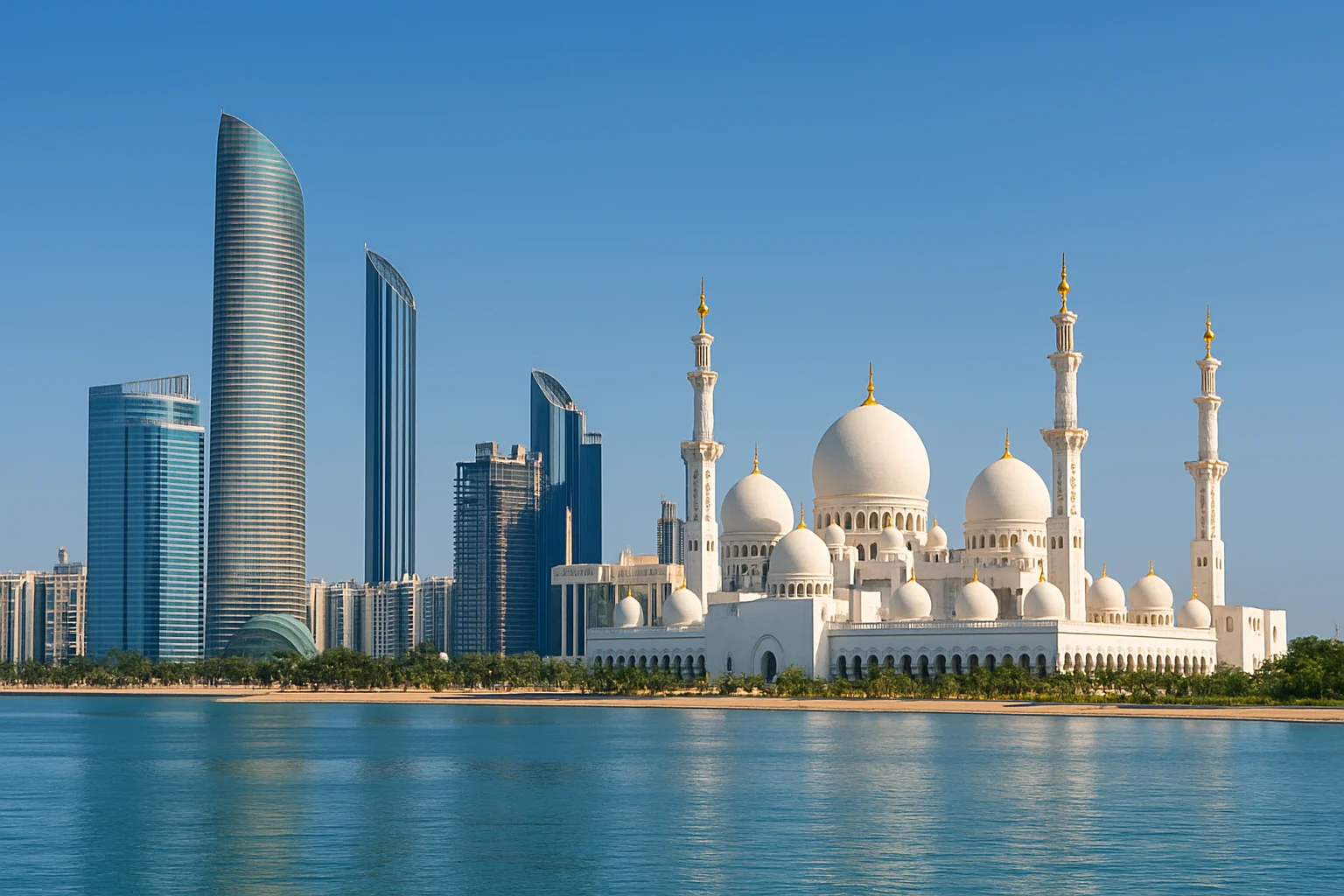
A strong city route starts with a short list of anchor stops, not a random collection of pins. In Abu Dhabi, that usually means selecting from the Sheikh Zayed Grand Mosque, Qasr Al Watan, the Corniche, and the Louvre Abu Dhabi, then arranging them in a sequence that makes geographic sense.
Why it matters
When you group landmarks logically, you spend less time doubling back across the city and more time actually seeing it. That makes the day feel composed. You notice architecture, waterfront views, and museum spaces more clearly when you are not checking the clock every 15 minutes.
| Route Cluster | Typical Stops | Why It Works |
|---|---|---|
| Morning cultural core | Sheikh Zayed Grand Mosque + Qasr Al Watan | Both reward slower visits and a more focused start |
| Waterfront stretch | Corniche + lunch nearby | Easy reset point in the middle of a full day |
| Art and modern city feel | Louvre Abu Dhabi + Saadiyat-side pause | Works well later in the day when you want a quieter pace |
Rule of thumb: fewer stops done well beats too many stops squeezed in badly.
Quick example
A better route might pair the mosque and Qasr Al Watan in one half of the day, then shift toward the Corniche or Louvre after lunch. A weaker route zigzags from mosque to museum to palace to backtrack for lunch. Both options may contain the same landmarks. Only one feels calm.
#4 Leave room for lunch, prayer, and photo breaks
What it is
This is the simple act of blocking out non-sightseeing time on purpose. Not accidentally. Not “if we get time.” On a full-day outing, you should expect to need meal breaks, short rests, restroom stops, prayer time, and a few unscripted pauses where no one is being hurried back into the car.
Why it matters
A route without breaks may look efficient on paper, but it often feels tiring by mid-afternoon. Children lose patience. Older travelers get drained. Even business guests who started the day fresh can hit a wall after three major stops. Pacing is not dead time. It is what protects the quality of the day.
A premium day trip is not a race — pacing is part of the experience.
Quick example
Say you visit two major landmarks before lunch, then pause at a shaded waterfront café near the Corniche for 45 minutes. After that, add a prayer break and one photo stop before the final attraction. You will likely cover less ground on paper, but the photos will be better, the mood will stay lighter, and the drive back to Sharjah will feel easier.
#5 Check dress codes, entry rules, and opening hours before you go
What it is
This is pre-trip housekeeping: confirming clothing expectations, tickets, opening times, and any attraction-specific rules before you leave Sharjah. The current search results are fairly thin and generic on these details, which is exactly why doing this small layer of planning pays off.
Why it matters
Some of Abu Dhabi’s most important sites are not casual walk-ups in every circumstance. The Sheikh Zayed Grand Mosque requires modest dress, and museums or cultural attractions may run on specific opening schedules or entry procedures. If you discover that at the gate, you lose time and momentum.
| Checkpoint | What To Confirm | Why You Should Care |
|---|---|---|
| Religious sites | Modest clothing, scarves, suitable coverage | Avoid delays or denied entry |
| Museums and palaces | Opening hours, ticket format, last-entry timing | Protect the route from sudden changes |
| Your group setup | ID, water, phone charge, comfort items | Keep the day moving without small disruptions |
Best practice: confirm the rules before you leave Sharjah, not after you arrive at the gate.
Quick example
Put a scarf, light outer layer, and ticket screenshots in reach before you board. If your first cultural stop is the mosque, do not leave modest clothing as a maybe. A five-minute check at home can save a 30-minute scramble later.
#6 Keep a traffic buffer for the return journey
What it is

This means planning the drive back as deliberately as the drive out. Many travelers think the day ends at the final attraction. It does not. The return leg is still part of the trip, and it matters just as much if you have dinner plans, a school-night routine, a business engagement, or an airport transfer waiting later.
Why it matters
Road travel between Sharjah and Abu Dhabi can stretch during busy periods, so a buffer is simply sensible. If you are a business traveler heading to an evening event, or a tourist catching a late flight, the calmest choice is to treat the return window as fixed operating time rather than spare time you can borrow from.
If the evening has a fixed commitment, treat the return time as part of the itinerary, not an afterthought.
Quick example
If you need to be back for an 8 p.m. dinner or a hotel pickup, do not schedule your final sightseeing stop as if the highway will stay perfectly clear. Leave Abu Dhabi earlier than feels strictly necessary. You will rarely regret getting home with margin. You will often regret reaching Sharjah with none.
#7 Compare a full-day plan with a private custom itinerary
What it is
You are really choosing between two planning styles. One option uses a full-day route from nearby emirates, which shows strong demand for simple day travel. Another emphasizes private chauffeur travel. The search landscape itself is split between simplicity and customization.
Why it matters
A planned route reduces decision fatigue. You know roughly where you are going, how long the day is, and what the order will be. A private custom itinerary gives you more say over pace, stop length, detours, and the tone of the day. Neither format is automatically better. Each works for a different kind of traveler.
| Option | Best For | Main Advantage | Main Trade-Off |
|---|---|---|---|
| Full-day plan | Families, first-time visitors, larger groups | Simple planning and predictable structure | Less freedom to change pace or add stops |
| Private custom itinerary | VIP clients, business travelers, small premium groups | Privacy, control, and route flexibility | Usually costs more and requires clearer preferences |
Choose the plan that matches your decision style: fixed and easy, or flexible and personalized.
Quick example
A family visiting Abu Dhabi for the first time may prefer a straightforward full-day route with major landmarks already mapped. A VIP guest, by contrast, may want a custom plan: mosque in the morning, a quiet lunch, one museum stop, then a direct transfer onward. The better choice depends less on the city and more on how you like to move through it.
How to Choose the Right Option for Your Abu Dhabi City Tour From Sharjah
Best for families and first-time visitors
If you want fewer decisions on the day, start with a pre-planned route that covers the headline stops and leaves room for lunch. Families usually benefit from simplicity: clear timings, an easy stop order, and enough vehicle space for bags, water, and tired passengers by late afternoon.
Best for business travelers and VIP clients
If privacy, schedule control, or a polished arrival matters, choose a private chauffeur format. This works especially well when your day includes calls, a formal lunch, an evening commitment, or an airport transfer. Quiet cabin time is not a small perk when you are moving between cities. It is working time.
Best for travelers who want the most flexibility
If you want to shape the day around your interests rather than around a preset circuit, go custom. Decide on your top two or three priorities first, then build the route around them. That might mean more time at the Louvre Abu Dhabi and less interest in the Corniche, or the reverse. A flexible plan only works well when you know what matters most to you.
| Your Priority | Best Fit | Why |
|---|---|---|
| Zero planning | Planned full-day route | Easy structure and lower decision load |
| Privacy and schedule control | Private chauffeur | More freedom between stops and better pacing |
| Specific interests or VIP hosting | Custom private itinerary | Lets the day follow your priorities, not a generic loop |
Decision shortcut: if you want zero planning, choose a planned route; if you want maximum control, choose a private custom one.
A successful Abu Dhabi day out is built, not improvised.
When you leave early, group landmarks sensibly, protect your breaks, and plan the return with the same care as the departure, the city opens up in a calmer way. That is what makes an abu dhabi city tour from sharjah feel smooth instead of rushed.
So when you picture your next trip, do you want a fixed route that keeps choices light, or a private schedule that bends around your day?
Travel Sharper With Luxurycar4rent
Luxurycar4rent makes city tours in Dubai and Abu Dhabi easy through online booking, chauffeur-driven vehicles, and inclusive pricing for polished transfers and cross-UAE journeys.


Leave a Reply